

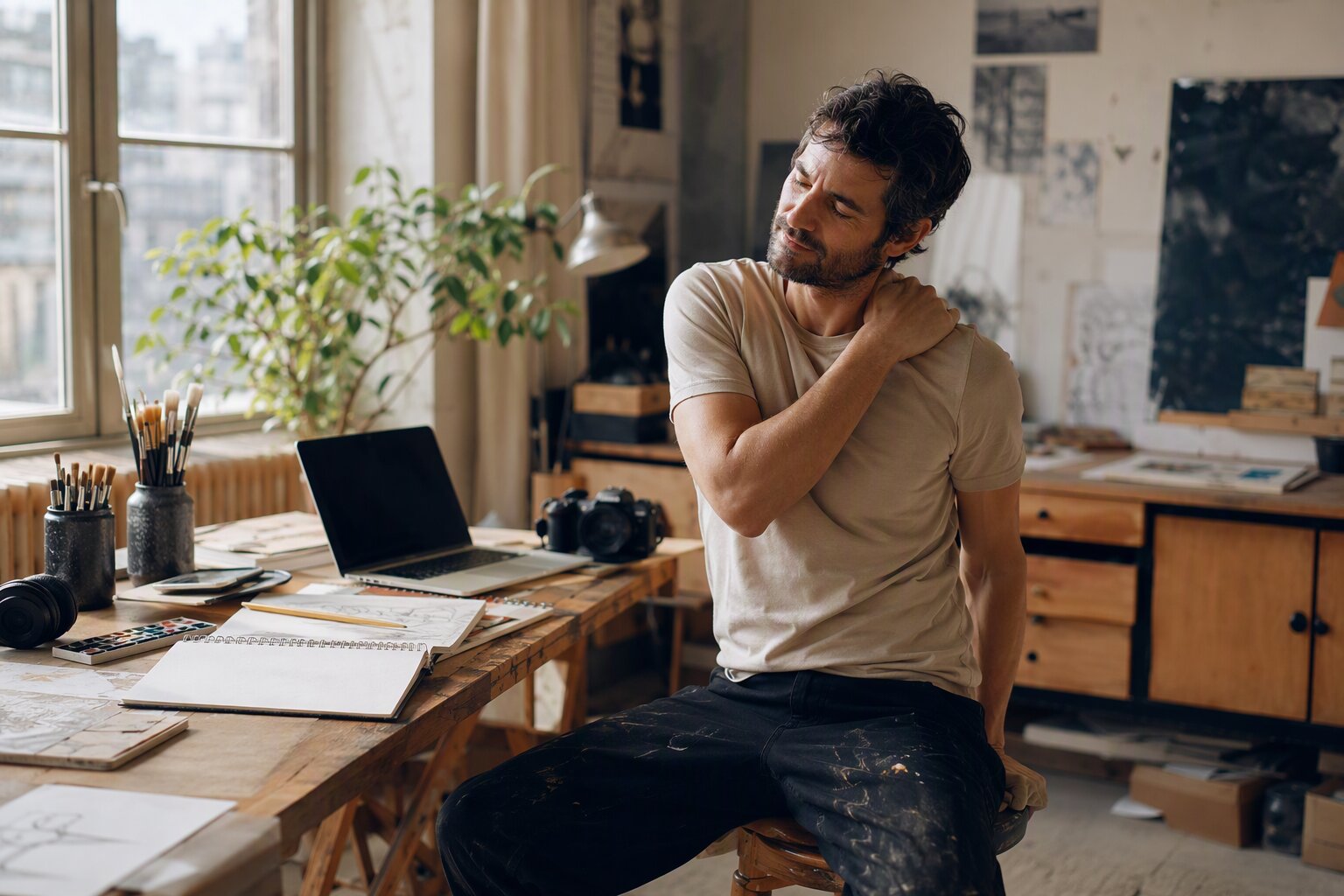
Creative work is often described as mental or emotional labour, but many artists also place sustained demands on the body. Musicians repeat the same fine movements for hours. Dancers train through fatigue. Actors wait for long periods and then perform under intense physical direction. Photographers carry equipment, painters work in fixed positions and editors remain at a screen late into the night. Because the work feels meaningful, discomfort can be dismissed as part of the process until it starts affecting concentration or technique.
A practical body-care routine begins with the conditions of the work. Notice where tension appears during rehearsals, production days or long studio sessions. A stiff neck after editing suggests a different adjustment from sore feet after a performance. The answer may be a change in chair height, shorter practice blocks, improved footwear or a better way to transport equipment. General advice is useful only when it connects to the activity that creates the strain.
Breaks work best when they occur before pain becomes distracting. A short change of position every hour may be more realistic than an ambitious routine that never fits the schedule. Performers can use pauses to release the jaw and shoulders, while visual artists may rest their hands and eyes. These habits do not need to interrupt creative flow for long. They protect the physical capacity that allows the work to continue.
Professional bodywork can also be part of a recovery plan. Before comparing options for massage for men, it helps to define the result you want. One customer may want to unwind after a demanding project; another may want focused attention on tension caused by posture or repetitive activity. A clear request lets the practitioner explain whether their approach is suitable. Persistent or severe pain belongs with an appropriately qualified healthcare professional, not a routine wellness appointment.
Creative workers often have irregular income and schedules, so cost and timing matter. Decide in advance what is affordable and ask for the full rate, session length and cancellation terms. A shorter appointment that can be maintained may be more useful than a single expensive session chosen in a moment of exhaustion. Free practices such as walking, stretching within a comfortable range and taking proper meal breaks still form the foundation. Paid care should supplement those habits, not create financial pressure.
Discovery platforms such as RentMasseur.com can make it easier to compare male massage providers by location and profile information. The customer should still contact the provider to confirm current rates, availability, setting and boundaries. If the appointment must fit between rehearsals or travel, leave enough time so that recovery does not become another rushed task. A provider who understands the schedule can help set realistic expectations for the session.
Creativity and rest don't operate as a simple trade. Extra hours can produce weaker work once fatigue dulls judgement and makes technique less precise. Recovery creates room to notice problems, test ideas and return with steadier attention. Artists still have to do the work, but they also have to recognise the limits of endurance and plan around them.
Artists protect their tools carefully, yet the body using those tools is easy to overlook. A modest routine of breaks, movement, sleep and appropriate professional care can reduce avoidable strain. Demanding days will still happen. The practical goal is to recover well enough that the work remains possible tomorrow.
